
Fleet Hub Page

Compact vs 4WD for Great Ocean Road (Which Wins?)

compact vs 4wd for great ocean road (which wins)

Hiring a car for the Great Ocean Road and stuck on whether to go compact or pay extra for a 4WD? It’s the question we field more than almost any other before someone books, and it’s worth getting right. Pick well, and you’ll keep more money in your pocket, drive something that suits the road, and not spend the week reversing an oversized vehicle into tight coastal carparks. Pick badly, and you’re either burning cash on a car that never leaves the bitumen, or somewhere past Apollo Bay, realising four adults and five days of luggage was always going to be a squeeze. 

Working out which type of car you choose can take a major hassle out of your pocket and it makes all the difference to what you spend and how comfortable the drive is. 

What Kind of Road is the Great Ocean Road 

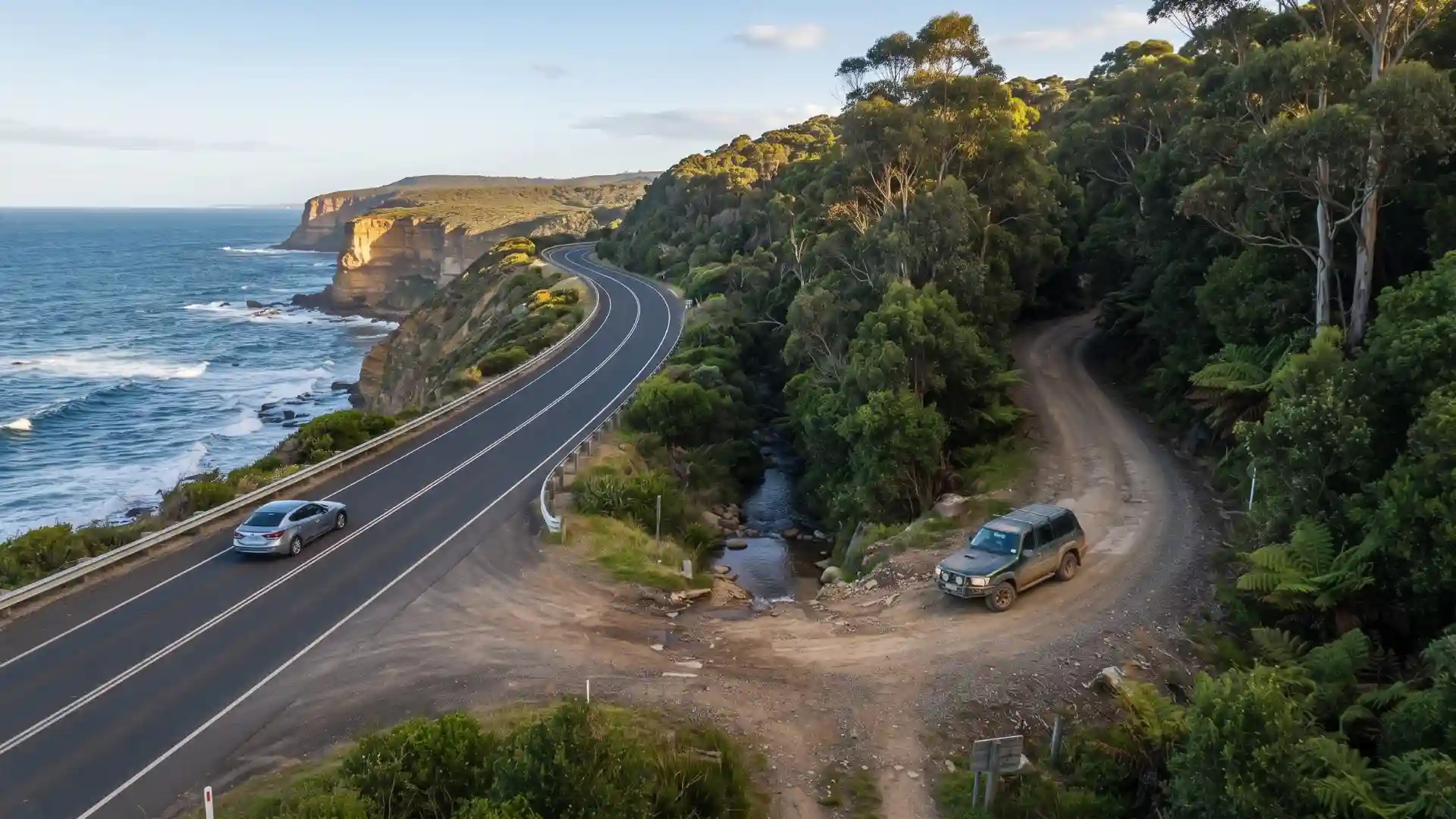
Most people arrive expecting something wilder. The name, the clifftop imagery, the Southern Ocean backdrop: it sounds like serious driving. The actual road from Torquay to Allansford is 243 km of sealed bitumen, shared daily by hatchbacks, campervans and family wagons without a second thought. It has no dirt, no creek crossings, nothing needing high clearance anywhere on the standard route. The drama belongs to the view out the window, not what’s under the tyres. 

Plus, most people take two to four days for the drive, with overnight stops in Lorne and Apollo Bay before heading back or pushing on to Warrnambool. A long weekend covers it comfortably. 

Why Do Most Travellers Go with a Compact 

Daily hire rates are noticeably lower on compacts than 4WDs, and over three to five days, that difference can add up. If a compact suits your route and passenger needs, you can compare our small & compact car hire options before booking. Money that could cover an extra night somewhere, decent meals along the way, or anything other than an upgraded hire rate for a vehicle that never gets pushed. 

  • Fuel Tells a Similar Story – You’ll likely cover 700 to 800 km between the main drive, any side trips, and moving between towns. Compacts use less per hundred km, and if you’ve ever filled up at a servo in Lorne or Apollo Bay, you’ll know the coastal pricing isn’t doing your budget any favours either. 
  • Parking is the One Thing People Forget – Lorne, Apollo Bay, Port Campbell, these are all small towns, not many bays, and busy in summer. A compact fits in spots a larger car would queue for. Winter is a different story, though. Far fewer visitors, easier parking, and the towns feel completely different without the summer crowds. It’s also easier on the road itself. That Lorne to Apollo Bay section is 45 km of back-to-back bends along clifftop terrain, and a car with some weight and width behind it works harder through there than something lighter and lower. 
  • Worth Keeping in Mind About Compact – It covers more than just the smallest cars on the lot. A mid-size sedan hires at compact rates and gives three or four people a more comfortable trip without jumping straight into SUV territory. 

Travelling as a couple, going solo, or heading down with a small group and beds already lined up? There’s nothing extra a 4WD brings to that trip. 

When Does Hiring a 4WD Make Sense 

  • Off-road into the Otways – The national park has unsealed tracks that a compact car shouldn’t attempt. Spots like the Aire River and the quieter inland waterfall roads need ground clearance and proper grip to reach. Most visitors drive past these without knowing they exist; a 4WD is what gets you there without bottoming out. 
  • Four People, Full Gear, Multiple Days – Camping kit, boards, bikes, or just a week’s worth of bags between four adults fills a hatchback quickly. After a couple of days, it stops being manageable. A larger SUV or 4WD gives everyone actual room and somewhere reasonable to put things. 
  • Campgrounds are Reached by Gravel – Quite a few sites near Princetown and through the Otways are accessed via unsealed roads. Nothing you’d call extreme, but arriving after dark on loose gravel with a packed car is easier when the vehicle has some clearance under it. 
  • Winter, or After Rain – The highway itself is fine in any conditions, but the back roads can turn into bad conditions quickly after rainfall. If the idea is to explore wherever looks interesting rather than stick to the sealed route, having a 4WD or AWD means wet roads aren’t a factor in the decision. 
  • If You’re Towing – Boat, trailer, van: tow capacity is needed, and most compacts aren’t built for it. 

Is an SUV Worth Considering as a Middle Option 

For some groups, it lands better than either extreme. Day rates on a mid-size SUV are lower than a full 4WD, fuel costs less to run, and you still get more boot room and a higher ride than a compact sedan offers. Families with a bit of luggage who want the flexibility for the odd gravel detour tend to find this the vehicle that actually fits what they’re doing. 

Things Worth Knowing Before You Drive 

  • Lorne to Apollo Bay is Not a Road to Rush – Forty-five kilometres of clifftop bends that wind the whole way through, and it asks for more attention than people bank on. Anyone who hasn’t driven it before tends to find it busier than a regular highway stretch. Stop at the lookouts, keep your speed sensible, and don’t make this the section where you try to claw back time. 
  • Kangaroos are Active at Dawn and Dusk in the Otways – Victoria has a lot of wildlife, and this part of the state has more than most. Early morning starts and late-night arrivals are when they’re on the move highest. Watch the edges of the road properly, not just a glance. 
  • Fill the Tank in Apollo Bay before Continuing West – Past that town, the servos become scarce, and the drive to Port Campbell and the Twelve Apostles is longer on the ground than it reads on a map. Top up while you’re in town rather than hoping something turns up later. 
  • Mobile Signal Disappears in Parts of the Otways and West of Apollo Bay – Get your maps downloaded offline before you set off and sort any navigation you’re relying on while you’re still in a town with decent coverage. Easy fix if you think of it beforehand. 

Common Mistakes Travellers Make When Choosing a Car Hire 

  • Hiring a 4WD out of caution when the entire itinerary stays on sealed roads. 
  • Not checking what’s included in the hire rate, as kilometre caps, insurance excess and one-way fees can close the gap between a compact and a 4WD quickly. 
  • Booking the smallest car on the lot for four adults without accounting for a week’s worth of luggage between them. 
  • Assuming all campgrounds are on sealed roads when several sites through the Otways are gravel access only. 
  • Leaving the car choice until peak season when limited availability means taking whatever’s left rather than what suits the trip. 

Compact or 4WD: Which One Should You Book 

Sticking to the main sealed route as a couple or small group? A compact is the right hire. Lower cost, less fuel, parks easily, and handles every kilometre of the highway without issue. 

Got a full car, heading off the bitumen, camping at unsealed sites, or going in winter when back roads get unpredictable? That’s when an SUV or 4WD starts to make sense, and the higher daily rate reflects what you’re actually getting. 

Cheaper Car Rentals has compacts, sedans, and SUVs available from Melbourne, with 200 km free per day and 24-hour roadside assistance on every booking. Browse our fleet or book your SUV hire online today, and take advantage of 200 km free per day and 24-hour roadside assistance on every booking.

Tips for Choosing a Rental Car That’s Right for You

What Led To The Popularity Of CCR Car Hire Services

Planning a holiday can be stressful. Whether you’re travelling for a weekend trip or a more extended vacation, being able to explore at your own pace is comforting. Therefore, hiring a rental car, especially in cities like Melbourne or Gold Coast, allows you to explore your destination comfortably. Cheaper Car Rentals offers a wide range of vehicles across Melbourne and Gold Coast, ranging from compact cars to spacious sedans, SUVs, and people movers. Our modern & reliable vehicles are offered in various car hire packages, ensuring you find an option that matches your budget and travel requirements.

So, if you’re looking to explore the great city of Melbourne or the beautiful beaches of Gold Coast, Cheaper Car Rentals offers convenient options across both destinations. Travellers heading to Queensland can review our Gold Coast Car Rental information for local pickup, booking and rental guidance before choosing a vehicle that suits their trip.

Choosing the Right Rental Car For Your Needs

When it comes to choosing a rental car in Melbourne or Gold Coast, there are several factors to consider. Cheaper Car Rentals has come up with some of the essential questions that you need to ask yourself when choosing the right rental car for your needs:

  • What kind of road trip will I be taking?
  • How many people will be coming?
  • How much space will I need to carry luggage or equipment?

You can also browse our fleet to compare the vehicle options available before choosing what best suits your trip.

Road Trip

Going on a road trip can be very exciting; however, if you are not careful, some uncertain events can turn your fun experience into a costly and dangerous one. That’s why you must choose the right vehicle for the right terrain when hiring a rental car. Renting a large SUV is the perfect way to explore the great outdoors and the sites that may be off the beaten track. Not only do SUVs provide comfort and space, but these vehicles can go off-road, giving you access to areas that would otherwise be inaccessible by a standard car. With an SUV rental, you can experience the freedom of a road trip with your family or friends while having ample space for all your travel equipment.

Travelling with a Large Family or Group

While travelling with others is stressful enough, thinking of how to fit their luggage in one car can be an additional pain. Cheaper Car Rentals has the solution to your problem. If passenger capacity is one of your main considerations, compare our People Mover & Passenger Van Hire options to see whether this category suits your group size, luggage and travel plans. We offer 8-seater Vans/People movers or 7-seater SUVs across Melbourne & Gold Coast that are perfect for travelling with families and groups. Additionally, these vehicles have enough storage space to accommodate all your luggage needs. If you’re deciding between the two for a Gold Coast trip, our suv vs people mover guide compares which option may suit your family or group better.

Travelling with a Medium-Small Size Family or Group

Travelling with a small family or group in Melbourne or the Gold Coast becomes effortless with Cheaper Car Rentals. Offering a wide selection from Small Compact Cars to Medium and Intermediate Sedans, Cheaper Car Rentals cater to diverse needs across Melbourne and Gold Coast. Sedans generally have four doors with a trunk, making loading and unloading luggage and other items easy. With comfortable seating and modern amenities such as air conditioning, entertainment systems, and safety airbags, sedans are great for family or groups who like those long trips and wants to explore places like the Great Ocean Road in Victoria or the Hinterlands in the Gold Coast. Sedans offer comfortable seating for up to 5 passengers and ample space for luggage or belongings.

Opting for a small compact car hire is a fantastic option for getting around inner suburbia, the inner cities of Melbourne CBD, and Gold Coats. Compact cars offer seating for up to 5 people without enough space to carry extra baggage for long travel. Small compact vehicles are also typically more fuel-efficient, allowing you to save money for other aspects of your journey. If you’re travelling solo or as a couple, mainly driving around the city and don’t need significant luggage space, consider small & compact car hire before moving up to a larger vehicle category.

Now that you know what type of rental car will suit your needs and help you enjoy your travel, book now! With Cheaper Car Rentals, you can hire your favourite car from your nearest location, whether in Melbourne or Gold Coast.

Suggested Car Hire for your next adventure.

1. Mitsubishi Outlander: A 7-seater SUV that can provide additional passenger space and flexibility for trips where a smaller car may feel restrictive. If this type of vehicle suits your travel plans, compare our SUV hire options before booking.

2. Nissan Elgrand: 8-Seater People Mover is an excellent vehicle for family or group travellers. It comes with high seats and a spacious interior for extra comfort.

3. Kia Cerato Sedan: 5-Seater Intermediate Sedan is great for medium-sized families or groups. It has enough space in the boot with plenty of interior storage options, including bottle holders in the doors, a phone cubby under the air-conditioning controls next to two USB ports, centre cup holders, and a decent-sized console.

4. Kia Picanto: This small compact car is excellent for exploring the cities and inner suburbs of Melbourne & Gold Coast. This car may be small in size, but it packs many features without compromising comfort.

Inspecting your Rental Vehicle – What to look for?

April 7, 2015 / 2260 / Travel Guide, Fleet Hub Page
inspecting your rental vehicle – what to look for

When you enter into a car rental agreement you are signing a contract that will make you liable for payment when a car is damaged. Whenever you are renting a car you should definitely inspect the car thoroughly.

When you enter into a car rental agreement you are signing a contract that will make you liable for payment when a car is damaged. Whenever you are renting a car you should definitely inspect the car thoroughly. Most reputable rental companies will provide you with a damage report to fill in. If a rental company does not provide this, you should be very cautious about renting from them.  So what should you mark on your damage report? We hope the following list is of assistance.

 The Exterior:

Check for dents and scratches and mark them in the corresponding area of your damage report. Good practice is to circle the area on the damage report where there is a dent, place an ‘X’ where there are stone chips and scratches and use lines to indicate long marks or scratches. It is also good practice to put notes on the damage report explaining what you have marked. It also helps to take a video or photos of what you find and if you do this try and get a shot that shows the position on the car, not just a close up of the damage. Be thorough with your inspection and ask questions of a company representative if you are not sure what fair wear and tear is.

A good tip is to check for even panel gaps all the way around the vehicle. Uneven panel gaps are a sign of a vehicle that has had accident damage and may be in need of further repair. If a rental vehicle has had a temporary repair, be sure that you have photographic evidence of how the vehicle was given to you in case something goes wrong.

The Windscreen:

It is important to check the windscreen carefully. Most rental companies deem small stone chips as fair wear and tear. Larger chips and cracks are not fair wear and tear if they breach roadworthy guidelines and hence need to be repaired so are at the renter’s expense. Always make sure you mark any windscreen chips on the damage report using and ‘X’.

The Interior:

Sometimes you might come across damaged interiors in rental cars.  If there is no room on the damage report to mark this, then writing a comment about the interior damage is acceptable. You may want to note things like rips and tears and stains so that you avoid cleaning fees.

Drivability of your vehicle.

Rental cars come in various types, ages and conditions. If you have elected to drive an older model car, then there may be some things that you have to accept. Things like faded paint and interiors are inevitable on older model rental cars. However, they should always be maintained to roadworthy standards. Things like lights, windscreen wipers, tyres and brakes should be serviceable, so if you notice issues with these, bring them to the attention of your rental company. If you are still deciding which vehicle type suits your trip, you can view our fleet to compare the available options.

Fuel and Kilometres travelled:

When you check your rental car for damage always make sure you note the amount of fuel in the car and how many kilometres the car has travelled. This is important where you opt for deals that have limited kilometre usage so that you do not pay for kilometres you did not use. Checking the fuel in the car is important as you do not want to be charged for fuel you did not use.

In summary, always be mindful that you are entering into a contract when you rent a car. Do not take for granted opportunities such as insurance excess reduction options and tyre and windscreen cover to reduce your liability. Products like these that are offered by your rental company can save you a lot of money if something goes wrong.

At Cheaper Car Rentals, we understand that accidents happen which is why we give you a damage report to fill in and we also take a video of the car for you to refer back to. We do this because we do not want our customers to be unfairly charged for something they did not do if there is any damage to a vehicle. We always recommend you take your time with filling in the damage report and take a video or photos of your rental car as we

NEED A HAND TO FIND YOUR CAR?

Cheaper Car Rental the cheaper alternative to travel across Victoria & Gold Coast

Compare List